Colombia carries a Level 3 advisory while Medellín records its least violent month in 50 years. Both are true. Here is what the advisories actually say, how the city really compares to New York, and the one risk that specifically targets foreign visitors.
What You Should Know
- Colombia sits at Level 3: Reconsider Travel with the U.S. State Department, issued March 31, 2026 for crime, terrorism, civil unrest, kidnapping and natural disasters. That is one tier above the Level 2 given to Mexico, France and Italy. Antioquia, the department Medellín sits in, is not on the Do Not Travel list; Arauca, Cauca, Valle del Cauca and Norte de Santander are.
- The city's own numbers are moving in the opposite direction to the advisory. February 2026 closed with 11 homicides in 28 days, the least violent month Medellín has recorded in 50 years according to the city's SISC security data system, and the city went ten straight days without a homicide between May 25 and June 3, 2026.
- The honest answer to whether Medellín is as safe as New York is no, not on homicide. Medellín closed 2025 at 13.13 homicides per 100,000 against roughly 3.7 for New York City. The city is dramatically safer than its reputation and still several times deadlier than NYC on that one measure, though almost none of that violence involves tourists.
- The risk that most specifically targets foreigners is drugging rather than violent street crime. The U.S., Canadian and UK advisories all warn about criminals using dating apps to lure foreign visitors and scopolamine to incapacitate them. The U.S. Embassy reported eight U.S. citizen deaths in Medellín between November and December 2023 in cases pointing to drugging, robbery and overdose, several involving dating apps.
- Theft against foreigners fell 55.8% year on year. Medellín's tourism secretariat recorded 121 thefts against foreign visitors through late June 2026 against 274 in the same period of 2025, while foreign arrivals rose 27.6% to about 376,700. More visitors, fewer robberies.
Is Medellín Safe to Visit in 2026?
Is Medellín safe right now?
Short answer: yes, Medellín is generally safe to visit in 2026 for tourists staying in El Poblado or Laureles, but it is not as safe as New York by homicide rate. The biggest tourist-specific risks are drugging and robbery linked to dating apps, phone theft, and street-hailed taxis. Colombia currently carries a U.S. Level 3: Reconsider Travel advisory, issued March 31, 2026, which applies to the country and not to Medellín specifically.
Is Medellín safe? For a visitor who stays in El Poblado or Laureles, uses ride-hailing apps instead of street taxis, and does not meet strangers from dating apps alone, yes: the practical risk is comparable to visiting a large Latin American city and lower than the city's reputation suggests. Medellín received roughly 376,700 foreign visitors in the first four months of 2026 alone, up 27.6% year on year, and thefts against foreigners fell 55.8% over the same stretch.
But you have probably found two completely contradictory answers already, and both are sourced. The U.S. State Department raised Colombia to Level 3: Reconsider Travel on March 31, 2026. Meanwhile Medellín's own security data system recorded February 2026 as the least violent month in the city in 50 years. Neither source is wrong. They are measuring different things: the advisory covers a whole country including regions with active armed conflict, while the city figures cover the Aburrá Valley where you will actually spend your trip.
This guide separates those two pictures. We cover what each of the four major governments says and where they disagree, the actual crime numbers including the ones that are getting worse, how the city genuinely compares to New York, which neighbourhoods to use and which to leave alone, and the drugging risk that is specific enough to Medellín that it deserves its own section.
If you are still shaping the trip itself, our Medellín city tour guide covers the guided options that handle the logistics for you, which is the single easiest way to reduce your exposure on a first visit.
Medellín Safety at a Glance
Before the detail, here is how the main risk categories stack up for a typical visitor staying in El Poblado or Laureles.
| Category | Rating for Tourists |
|---|---|
| Violent crime affecting tourists | Low, and falling |
| Drugging via dating apps or bars | The risk most flagged by advisories, and the one that targets foreigners |
| Phone and bag theft | Moderate, the most common incident by volume |
| Street-hailed taxis | Moderate to high, entirely avoidable |
| Metro and Metrocable | Good, watch pockets at rush hour |
| El Poblado and Laureles by day | Good |
| Centro after dark | Avoid |
| Comuna 13 on a guided day tour | Good |
| Comuna 13 independently after dark | Avoid |
| Solo female travel | Moderate, with the drugging caveat applying doubly |
| Organised day tours | Good with licensed operators |
| Altitude and sun (1,495 m) | Low, mild for most people |
ℹ️ Ratings reflect typical risk for visitors staying in Medellín's main tourist neighbourhoods and taking normal precautions. They are not a guarantee, and conditions vary by area, season and time of day.
Current Travel Advisories: What Each Government Says
This is where most articles about Medellín quietly mislead you, in both directions. Blogs written to sell tours quote the city's homicide statistics and skip the advisory. Nervous coverage quotes the advisory and skips the fact that it covers regions 500 kilometres from Medellín. Reading all four governments gives a far more accurate picture than reading any one.
| Government | Advisory Level | What It Says | Official Source |
|---|---|---|---|
| United States | Level 3 of 4: Reconsider Travel | Issued March 31, 2026 for crime, terrorism, civil unrest, kidnapping and natural disasters. Cites murder, assault, robbery, drugging, extortion and armed break-ins including at hotels. Do Not Travel applies to Arauca, Cauca (excluding Popayán), Valle del Cauca (excluding Cali) and Norte de Santander, plus within 10km of the Venezuelan border. Antioquia and Medellín carry no separate warning. | U.S. State Department |
| Canada | Exercise a high degree of caution | Updated September 4, 2026. Notes an increase in deaths linked to criminals using dating apps to lure foreigners, occurring frequently in larger cities including Medellín. Flags scopolamine drugging, express kidnappings in affluent and tourist areas, and common pickpocketing. In Antioquia, advises against non-essential travel only to the Chocó border area and north of Buriticá, not Medellín. | Government of Canada |
| United Kingdom | Advises against all but essential travel to parts of Colombia | Lists Medellín among major cities where pickpocketing, mugging and armed robbery are problems. Describes criminals using scopolamine to incapacitate victims via food, drinks, cigarettes and aerosols, leading to robbery and sexual assault, and teams using dating apps against lone foreign travellers. Recommends licensed app-based taxi services over street hailing. | UK Foreign, Commonwealth & Development Office |
| Australia | Exercise a high degree of caution, with Do Not Travel regions | Cites violent crime, kidnapping and the activity of armed groups, with reconsider-travel and do-not-travel wording applied to specific departments rather than to Medellín. Also flags drink spiking and drugging. | Australian Government Smartraveller |
How to read this honestly: the U.S. Level 3 is the highest advisory tier applied to any destination this network covers, and pretending otherwise would be dishonest. It is also a country-level rating driven substantially by departments with active armed group conflict, none of which is Antioquia. The tell is in the geography: every government that names specific no-go zones puts them elsewhere, and Canada's Antioquia carve-outs are rural areas near the Chocó border, hundreds of kilometres from the city.
What we find more useful than the level is the mechanism each one flags: drugging, dating apps and street-hailed taxis. Four governments writing separately converged on that same short list, and none of it is the thing most people are actually afraid of when they ask whether Medellín is safe.
ℹ️ Advisory levels and wording change, and Colombia's has moved in recent years. Check the official source links above before you travel rather than relying on any article, including this one.
How Safe Is Medellín? The Numbers
Medellín has the most dramatic crime turnaround of any major city in the hemisphere, and that story gets told so enthusiastically that the parts which are not improving tend to disappear. Here is the full picture, including the figures that went the wrong way.
- The historical fall is real and enormous. Medellín peaked at roughly 380 to 395 homicides per 100,000 residents in 1991, when it was the most dangerous city in the world. It closed 2025 at 13.13 per 100,000. That is a decline of about 97% in a single generation, and it is the essential context for everything else on this page.
- 2025 was a step backwards, not forwards. The city recorded 346 homicides in 2025, up 5% on 329 in 2024, taking the rate from 12.18 to 13.13 per 100,000. Mid-year the trend looked worse still, with homicides up 27% by July 15. We include this because most safety pages quote the 2024 record low and stop.
- 2026 has been sharply better. February 2026 closed with 11 homicides in 28 days, the least violent month in 50 years per the city's SISC data system, against 19 in February 2025. The city recorded 39 homicides through early March and 120 by June 3, and went ten consecutive days without a homicide between May 25 and June 3.
- What the violence actually is has changed. The largest single category in 2025 was interpersonal disputes (108 cases, up 30%), ahead of organised criminal structures (96). Only two of the year's homicides were theft-related. This matters for a visitor: the dominant form of lethal violence in Medellín is now arguments between people who know each other, which is not a category tourists fall into.
- Violence is concentrated where tourists are not. La Candelaria (the downtown core) led 2025 with 72 victims, followed by Manrique, which nearly doubled from 17 to 33. Neither is El Poblado or Laureles. Antioquia department as a whole recorded 1,664 homicides in 2025, its lowest figure in 12 years.
- Crime against foreigners specifically is falling fast. Medellín's tourism secretariat and its SITE intelligence system recorded 121 thefts against foreign visitors through June 26, 2026, against 274 in the same period of 2025, a 55.8% reduction, plus one homicide of a foreigner in 2026 against two in 2025. Over the same period foreign arrivals rose 27.6%.
The honest read: Medellín is vastly safer than it was, meaningfully safer than its reputation, and the specific numbers for foreign visitors are improving quickly. It is also a city where the homicide rate rose in 2025 and where the downtown core still carries a real rate of violence. Both halves belong on the same page.
Is Medellín as Safe as New York? An Honest Comparison
This comparison circulates constantly, usually in the form "Medellín is safer than most U.S. cities," and it is worth taking apart because it is partly true and partly a sleight of hand.
| City | Homicides per 100,000 | Period |
|---|---|---|
| New York City | ~3.7 | 2025 (309 homicides) |
| Medellín | 13.13 | 2025 (346 homicides) |
| Bogotá | ~14.7 | Recent year |
| Baltimore | ~23 | Recent year |
| Chicago | ~24 | Recent year |
So is Medellín as safe as New York? On homicide, no. Medellín's rate is roughly three and a half times New York's. New York is an unusually safe large city by American standards, with a rate below the U.S. national average, so it is the hardest possible comparison and the one that gets quietly swapped out when someone wants a flattering number.
The "safer than most U.S. cities" claim is defensible, but only against a specific set of them. Medellín does sit below Baltimore, Chicago, St. Louis, New Orleans and Detroit on homicide rate. It sits well above New York, Boston, San Diego and Seattle. Whether the claim is true depends entirely on which American city you pick, which is why we would not lead with it.
Where the comparison genuinely breaks down is who the violence reaches. A homicide rate is a poor proxy for tourist risk in either city, and in Medellín the gap is unusually wide: only two of the 346 homicides in 2025 were connected to theft, the dominant category was interpersonal disputes, and the geographic concentration is in comunas no visitor has reason to enter. One foreigner was killed in Medellín in the first half of 2026 among roughly 376,700 arrivals.
The version we would stand behind: Medellín has a higher homicide rate than New York and a lower one than several major U.S. cities, and for a tourist in El Poblado the practical day-to-day difference from a big-city trip anywhere is petty theft exposure and the drugging risk covered below, rather than any realistic chance of being caught in lethal violence.
The Risk That Actually Targets Foreigners: Drugging and Dating Apps
If you read only one section of this page, read this one. It is the risk that the U.S., Canadian, UK and Australian advisories each raise independently, it is the one that specifically selects foreign visitors rather than catching them incidentally, and it is almost entirely absent from the "Medellín is safe now" content that dominates search results.
What happened: the U.S. Embassy in Bogotá issued a security alert on the risks of online dating applications after eight U.S. citizens died in Medellín between November 1 and December 31, 2023. The Embassy stated the cases were not believed to be linked to each other, and that several pointed to involuntary drugging, robbery and overdose, with several involving online dating applications. Over the final four months of 2023, the Embassy reported robberies of foreign visitors up 200% and deaths up 29% against the same period in 2022.
How the pattern works: the UK Foreign Office describes criminals working in teams, with a woman easing the victim into a false sense of security before the victim is incapacitated and robbed. Canada's advisory describes criminals putting drugs into items including food, drinks, hand sanitiser and make-up, and says victims can be left disoriented and unable to make clear decisions for 24 hours or more. The drug most often named in both is scopolamine, known locally as burundanga; the UK notes it is used to temporarily incapacitate victims, and reported cases describe compliance and memory loss rather than obvious sedation.
Why it matters more than ordinary robbery: an incapacitated victim may be walked to an ATM or back to their own apartment, with little or no memory of it afterwards, so the loss is typically larger than a street mugging. The UK Foreign Office also links drugging to sexual assault, not only theft. Express kidnapping, which Canada notes occurs in affluent and tourist areas, works on the same principle of getting the victim to withdraw funds.
What actually reduces the risk:
- Do not invite a stranger from an app to your accommodation, and do not go to theirs. This substantially reduces your exposure to the documented dating-app robbery pattern, since the reported cases overwhelmingly involve a private location. Meet in a busy public place if you meet at all.
- Watch your drink from the bar to your hand. Do not accept an open drink from anyone you have just met, and do not leave one on a table while you dance. Parque Lleras on a weekend night is where this most often happens.
- Tell someone where you are. Share your live location with a friend or family member before a night out. Several of the 2023 cases were discovered late because nobody knew where the person had gone.
- Keep the amount you can lose small. Carry one card and a modest amount of cash, leave the rest in the accommodation safe, and set low daily withdrawal limits before you travel.
- Sex work carries this risk in a concentrated form. Medellín's authorities have run repeated crackdowns on exploitation tied to foreign visitors, and the drugging-and-robbery pattern is heavily represented in this context.
We are not including this to frighten anyone off a city we write about enthusiastically elsewhere. We include it because it is the one Medellín risk where a visitor's own decisions change the outcome almost completely, and where the popular reassurance genuinely omits something important.
Medellín Safety by Neighbourhood
Medellín is a city of 16 comunas and the safety picture varies more between them than in most places you will have visited. Where you sleep and where you walk after dark matters more here than almost any other decision on this list.
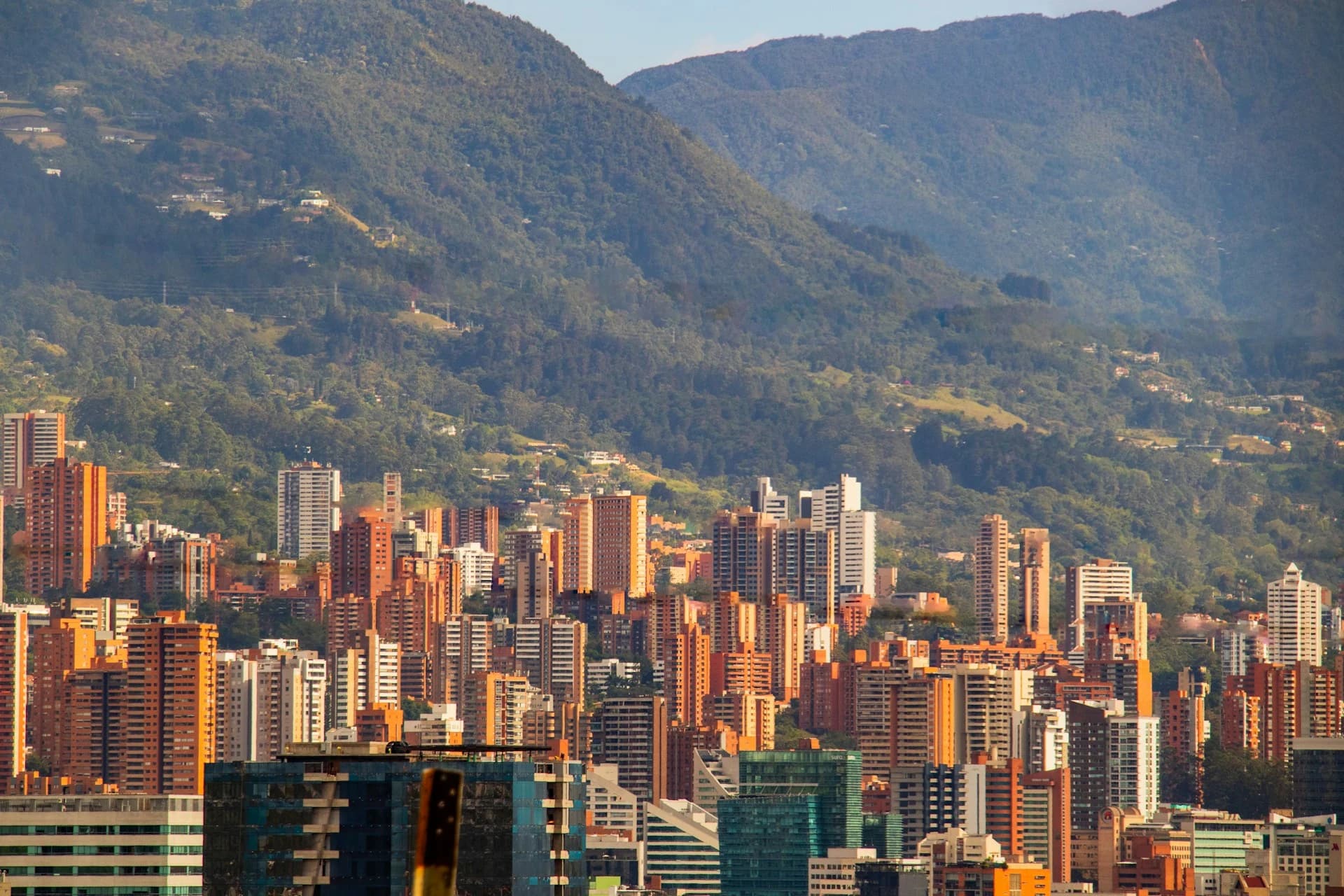
El Poblado
The default visitor base, and the area most visitors find easiest by day. Provenza, Manila and the surrounding hillside hold most of the hotels, restaurants and coworking spaces, with a heavy police presence and constant foot traffic. The caveat is specific rather than general: Parque Lleras late on weekend nights is where drink spiking, opportunistic theft and drunk-tourist incidents concentrate. The area is fine; the 2am club exit is where problems cluster.
Laureles and Estadio
Our preference for a first stay, and increasingly the local favourite. Flatter, greener, more residential and more Colombian than El Poblado, with a walkable restaurant strip along La 70 and less of the party economy that attracts predatory crime. Petty theft still happens, as it does in any dense neighbourhood, but the night-time risk profile is calmer than Lleras.
Envigado and Sabaneta
Quiet, well-regarded and further from the tourist economy. Both are separate municipalities in the Aburrá Valley, popular with longer-stay visitors, and both are ordinary middle-class Colombian towns rather than tourist zones. Normal city awareness applies.
El Centro and La Candelaria
Worth seeing by day with a guide, and not somewhere to linger after dark. This is where Plaza Botero, the Museo de Antioquia and the genuine commercial heart of the city are, and it is also the comuna that led the 2025 homicide figures with 72 victims. Go in daylight, ideally on a guided walk, carry very little, and be off the streets around Parque Berrío and Prado before evening. Our Medellín city tour guide covers the guided options that cover this ground with someone who knows which blocks to skip.
Comuna 13 (San Javier)
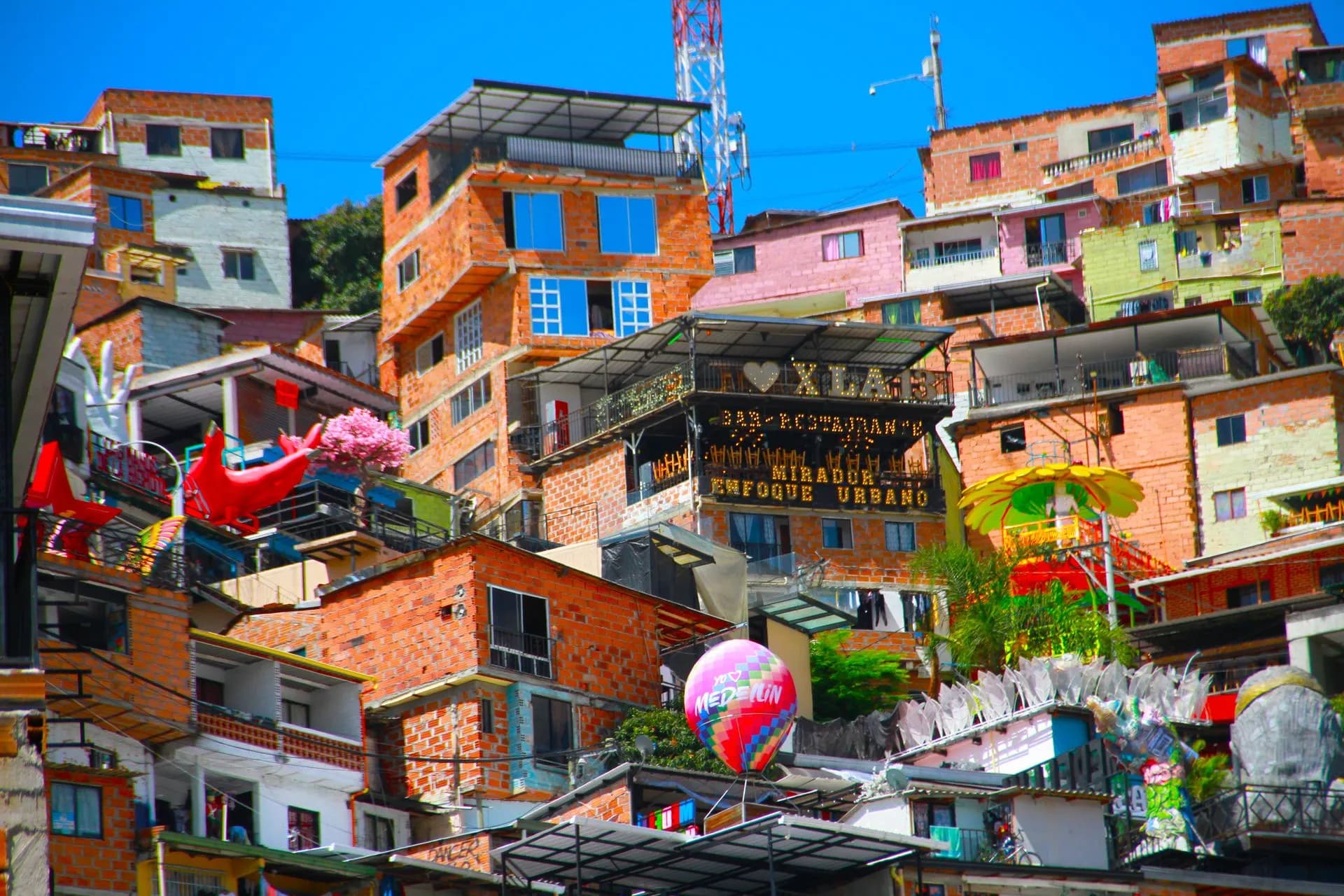
Safe as a guided daytime visit, genuinely not safe independently at night. The escalator route and mural circuit is one of the most heavily policed and heavily visited stretches in the city, and guided tours there have an excellent record. It remains a low-income neighbourhood with an active armed-group presence away from the tourist corridor, and there was renewed friction between rival groups around the cable car stations in early 2026. Go with a guide, go in the morning or early afternoon, stay on the route. Our Comuna 13 tour guide compares the operators who run it.
Areas to leave alone
The peripheral hillside comunas. Manrique, Aranjuez, Popular, Santa Cruz and the upper reaches of the western hillside are where the city's remaining violence is concentrated, and they hold nothing a visitor needs. This is not a moral judgement on the neighbourhoods, most of whose residents are the actual victims of that violence, but there is no tourist reason to be there and no tourist infrastructure if something goes wrong.
Getting Around Safely: Taxis, Apps and the Metro
Transport is where a disproportionate share of bad tourist experiences in Medellín begin, and it is also the easiest category to fix, because the safe option is also the cheap and convenient one.
Do not hail taxis on the street
This is the clearest single rule on the page, and every government says it. Canada's advisory tells travellers to avoid hailing taxis on the street and to use reputable companies through a hotel or a ride-hailing app. The UK's says to use licensed telephone or internet-based services. Inflated fares and meter games are common with street-hailed cabs, and both Canada and the UK link street-hailed taxis to the more serious express kidnapping and forced-ATM-withdrawal pattern. It is not that most street taxis are dangerous; it is that you cannot tell which one is not, and you have no record of the trip.
Use ride-hailing apps
Uber, DiDi and Cabify all operate in Medellín and are the local standard. Uber operates under a vehicle-rental-with-driver model following a 2023 Colombian Supreme Court ruling, and while the regulatory position around app platforms remains contested, they are used openly by residents and visitors alike. The safety benefit is structural rather than about the driver: a named driver, a recorded route, a fixed price and a trip log someone else can see. Some drivers ask passengers to sit in front to look like a private arrangement, which is normal.
The Metro and Metrocable
Genuinely good, and a point of civic pride. The metro is clean, fast, well-policed and used by everyone; the Metrocable gondolas that climb the hillsides are both public transport and one of the best views in the city. The single caveat is pickpocketing in rush-hour crush, so wear your bag in front and keep your phone away. Note that the neighbourhoods at the top of some Metrocable lines are not places to wander at will, even though the stations themselves are fine.
Phones and walking
Phone snatching is the highest-volume crime affecting visitors. The local shorthand is no dar papaya, roughly "do not give them an easy opportunity," and it mostly means keeping your phone out of your hand on the street. Do not navigate while walking on a busy pavement, do not put your phone on a restaurant table facing the street, and be particularly careful near traffic lights where motorcycles wait.
Day trips out of the city
Book licensed operators rather than arranging rides informally. The main routes east to Guatapé and into the coffee-growing hills are well travelled and routinely trouble-free, and the practical argument for a proper operator is insured transport, a driver who knows the road, and someone accountable if plans change. Our Guatapé day trip guide and coffee tour guide cover the operators on those routes. Our guide to the best things to do in Medellín covers the full list of activities once you have the safety picture straight.
Common Scams and Petty Crime
Almost every incident a visitor to Medellín actually experiences falls into this section rather than into anything violent. None of it is exotic, and most of it is preventable.
- Phone and bag snatching from motorcycles. The classic version is a pillion passenger taking a phone from a hand at a traffic light or an outdoor table. Keep the phone pocketed near roads.
- ATM manipulation and helpful strangers. Use ATMs inside banks, shopping centres or hotels during business hours, and decline anyone who offers to assist. Shield the keypad and refuse machines in unattended street vestibules.
- Fake police. Genuine officers do not need to inspect your wallet or count your cash. If someone in uniform asks to check your money for counterfeits, that is the scam. Ask to walk to a police station or a CAI post.
- Drink spiking in bars. Covered in full above, and the reason it appears twice is that it is both a scam and the most serious risk on the page.
- Overpriced and rigged taxi fares. Meterless negotiation, "broken" meters and long routes. Apps solve this entirely.
- Currency confusion. Colombian peso notes carry a lot of zeros and a 100,000 note looks much like a 10,000 to a new arrival. Count deliberately and pay with a card where you can.
- Rental and deposit scams on short-term apartments. Book through established platforms with payment protection rather than transferring a deposit directly to an individual.
- Buying drugs. Beyond the legal exposure, this is a reliable route into robbery, extortion and police trouble, and it is one of the few categories where a visitor actively creates their own risk.
Our Take
The pattern we keep seeing is that the fear people arrive with and the risk they actually face have almost nothing in common. Nobody is being caught in cartel crossfire in Provenza. What genuinely goes wrong is a phone taken at a traffic light, a street taxi that becomes an ATM trip, or a drink accepted from someone met online three hours earlier.
Practical Safety Tips for Medellín
- Stay in El Poblado or Laureles on a first visit. Both have the infrastructure, the foot traffic and the police presence, and Laureles trades some nightlife for a calmer night-time profile. It is the single decision that shapes your exposure most.
- Use apps for every single ride. Uber, DiDi or Cabify, or a taxi ordered through your hotel. No street hailing, including outside a club at 3am when it is most tempting.
- Practise no dar papaya with your phone. Out of your hand on the street, off the outdoor table, and not in use near stationary traffic. Phone snatching is the highest-volume crime reported by visitors, so this habit addresses more incidents than any other single change.
- Never take a stranger from an app to where you sleep. The highest-consequence rule on this page, and the cheapest to follow.
- Keep your losable amount small. One card, modest cash, passport and the rest in the safe, plus a low daily ATM limit set before you fly.
- Treat Centro as daytime-only and Comuna 13 as guide-only. Both are worth your time, and both on those terms.
- Save the numbers. 123 is the general emergency line in Colombia, and the tourist police (Policía de Turismo) operate in the main visitor areas. Keep your accommodation's address written in Spanish on your phone.
- Get travel insurance with medical cover. Private care in Medellín is genuinely good and comparatively affordable, which is exactly why an uninsured emergency is a solvable problem you should not have to solve with a credit card.
- Learn enough Spanish to be unremarkable. English is not widely spoken outside El Poblado and the tourist trade. Basic Spanish reduces both friction and the visible-outsider signal that opportunistic crime selects for.
- Register with your embassy. U.S. travellers can enrol in the Smart Traveler Enrollment Program (STEP) for alerts and easier contact in an emergency.
- Take the altitude and sun seriously for a day. Medellín sits at about 1,495 m, which is mild, but the equatorial UV is strong year-round and the first day at altitude plus a heavy night out is a common way to feel dreadful.
Who Should Think Twice About Medellín
Medellín suits a lot of travellers extremely well, which is why it is worth naming the ones it suits less. None of these make the city unsafe; they are mismatches between what someone wants and what the place asks of them.
- Anyone unwilling to change how they move around. The safety case for Medellín depends on using apps rather than street taxis and treating certain neighbourhoods as off-limits after dark. A traveller who intends to wander wherever and hail whatever is opting out of most of the protection.
- Travellers whose plans centre on app-based hookups or the nightlife economy. This is where the documented harm to foreign visitors concentrates, and no amount of city-level improvement changes that specific pattern.
- Very nervous first-time visitors to Latin America travelling solo. Not because the risk is unmanageable, but because Medellín rewards a bit of Spanish, some street awareness and comfort with a big informal city. A guided-tour-heavy first trip works far better than an improvised one.
- Anyone who needs a destination with a reassuring advisory to satisfy an employer or insurer. Level 3 has practical consequences for some corporate travel policies and some insurance products, regardless of what the city's own figures say. Check before you book rather than after.
- Travellers expecting the reputation to be entirely obsolete. The transformation is real and the city deserves the credit. It is still a place where the homicide rate rose in 2025, where downtown carries genuine risk, and where armed groups retain influence in the peripheral comunas.
For everyone else, and that includes the roughly 376,700 foreign visitors who arrived in the first four months of 2026, Medellín is a city where informed, unglamorous precautions go a very long way.
How We Researched This Guide
We built this guide from primary sources rather than from the existing crop of Medellín safety articles, most of which have a tour to sell or a fear to stoke. We read the U.S. State Department, Government of Canada, UK Foreign Office and Australian Smartraveller advisories directly and recorded what each actually says, including where they disagree in level and tone. Advisory positions were verified in September 2026. Crime figures come from Medellín's own Sistema de Información para la Seguridad y la Convivencia (SISC), the city's tourism secretariat and its SITE tourism intelligence system, Antioquia departmental reporting, and Colombian press coverage of those releases. Where a figure was mid-year rather than full-year, we say so. We deliberately included the numbers that moved in the wrong direction, notably the 5% rise in homicides in 2025 and the 27% mid-year increase, because a safety guide that only quotes the record lows is marketing. We gave the dating app and scopolamine risk its own section because it is the one risk all four governments flag independently, it specifically selects foreign visitors, and it is the most consistently omitted item in the reassuring coverage. We also answered the New York comparison honestly rather than picking the flattering U.S. city. Advisory levels and crime figures change, so every official source is linked for you to check before you travel.
Frequently Asked Questions
Is Medellín safe to visit right now?+
For most visitors staying in El Poblado or Laureles, yes, with specific precautions. Medellín recorded its least violent month in 50 years in February 2026 (11 homicides in 28 days) and thefts against foreign visitors fell 55.8% year on year. Note that Colombia as a country carries a U.S. Level 3: Reconsider Travel advisory issued March 31, 2026, though Antioquia and Medellín are not on any Do Not Travel list. Check the official advisories before you go.
Is Medellín as safe as New York City?+
No, not on homicide rate. Medellín closed 2025 at 13.13 homicides per 100,000 against roughly 3.7 for New York City in 2025, so Medellín's rate is about three and a half times higher. Medellín does sit below Chicago (~24) and Baltimore (~23). For a tourist the more useful figure is that only two of Medellín's 346 homicides in 2025 were theft-related, and one foreign visitor was killed in the first half of 2026 among roughly 376,700 arrivals.
Is Medellín safe for American tourists?+
Broadly yes, and Americans are the largest group of foreign visitors at about 38.7% of arrivals. The one risk that disproportionately affects them is drugging and robbery via dating apps: the U.S. Embassy reported eight U.S. citizen deaths in Medellín between November and December 2023 in cases linked to drugging, robbery and online dating. Do not take app matches to your accommodation, watch your drinks, and share your location on nights out.
What is the safest area to stay in Medellín?+
El Poblado and Laureles are the two standard choices. El Poblado has the densest concentration of hotels, restaurants and police presence, with the caveat that Parque Lleras late on weekend nights is where drink spiking and theft cluster. Laureles is flatter, greener, more residential and calmer at night, which is why we would lean that way for a first visit. Envigado and Sabaneta are quieter options further from the tourist economy.
Is Comuna 13 safe for tourists?+
On a guided daytime visit, yes. The escalator and mural route is heavily policed, heavily visited and has an excellent record with tour groups. Independently after dark it is not safe: it remains a low-income neighbourhood with armed group presence away from the tourist corridor, and there was renewed friction between rival groups near the cable car stations in early 2026. Go with a guide, go in daylight, stay on the route.
What is the biggest safety risk in Medellín?+
Drugging, usually via someone met on a dating app or an accepted drink, rather than violent street crime. The U.S., Canadian, UK and Australian advisories each raise it. Canada reports victims can be left disoriented and unable to make clear decisions for 24 hours or more, which is what enables ATM withdrawals and apartment access rather than a simple mugging. After that, the highest-volume risks are phone snatching and street-hailed taxis.
Are taxis safe in Medellín?+
Use apps, not the street. Canada's advisory explicitly says to avoid hailing taxis on the street and to book through a hotel or ride-hailing app, and the UK says the same. Uber, DiDi and Cabify all operate in Medellín and are widely used, giving you a named driver, a recorded route and a fixed fare. Street-hailed cabs carry the risk of inflated fares, and both advisories connect them to express kidnapping and forced ATM withdrawals.
Is Medellín safe for solo female travellers?+
Many solo women visit without incident, and the standard precautions carry extra weight here. The drink spiking and dating app risks apply regardless of gender, and the UK Foreign Office notes drugging is linked to both robbery and sexual assault. Practical steps: stay in Laureles or El Poblado, use ride-hailing apps for every trip including short ones, never leave a drink unattended, share your live location on nights out, and avoid walking alone after dark outside busy areas.
Affiliate note: Some links on this page are affiliate links. If you book through them, we may earn a small commission at no additional cost to you.