The five best-rated Pablo Escobar tours in Medellín compared on price, sites visited and how they handle the history, from a $30 shared walk to a $93 private car, plus what the city itself thinks of them.
What You Should Know
- This is contested tourism, and it is worth knowing that before you book. Medellín's city government discourages Escobar tourism, demolished his Mónaco building in 2019, and replaced it with a park commemorating cartel victims. Many residents lost family in that era and find the tours painful.
- The tours differ enormously in how they handle the subject. Some centre the victims and the city's recovery; others sell proximity to Escobar himself. The itinerary tells you which you are getting: a stop at Inflexión Park signals the first, a family-run museum visit signals the second.
- The Pablo Escobar Museum is owned and operated by Escobar's family. That is not hidden, but it is rarely stated plainly in listings, and it means your entrance fee goes to his relatives. Several tours here include it, so decide how you feel before booking rather than at the door.
- Expect more time in the vehicle than at the sites. This is the most common complaint across every operator: the stops are scattered across Medellín, each visit is short, and Medellín traffic does the rest. On shared departures, check whether the guiding is English-only or bilingual, because a bilingual guide delivers everything twice and that noticeably stretches the day.
- One option on this page is a museum entry, not a tour. The 45 to 90 minute Museo Pablo Escobar visit includes no transport and covers a single site, so compare it against the three to five hour guided tours accordingly.
Pablo Escobar Tours in Medellín
A Pablo Escobar tour in Medellín is a half-day history tour covering the sites tied to the Medellín Cartel: the neighbourhood football pitches Escobar funded, the rooftop in Los Olivos where he was shot in 1993, his grave at Montesacro cemetery, and the ground where the Mónaco building stood until the city demolished it. What separates the five tours on this page is not really price. It is how each one chooses to tell that story.
That distinction matters more here than on any other tour page we write. Medellín is a city of 2.5 million people that spent the late 1980s under bombing campaigns, and the best Pablo Escobar tour in Medellín by most travelers' reckoning is the one that treats the era as history with victims rather than as a crime thriller. This guide compares all five on price, duration, sites visited and format, and is direct about which lean which way.
Quick verdict: Book Pablo Escobar in Medellín: The Places That Tell Your Story at $30. It is the cheapest full tour here, holds 4.8 across 1,790 reviews, visits the Inflexión Park victims memorial, and leaves the family museum optional rather than baking it in. Guests consistently describe it as explaining the devastation the cartel caused rather than glorifying it, which is the whole question on this subject. Choose differently for a specific reason: the $40 tour if you want museum entry and a beer tasting included, or the $89 private tour for hotel pickup and the optional La Catedral extension.
Pablo Escobar in Medellín: The Places That Tell Your Story
It is the cheapest full tour on this page and the one guests most often describe as balanced: it visits the Inflexión Park victims memorial, keeps the family museum optional rather than fixed, and reviewers repeatedly note that it explains the devastation the cartel caused instead of glorifying it.
Book NowFrom Our Experience
Two honest caveats behind the high ratings. First, this is largely a driving tour: the sites are scattered, the stops are brief, and more guest complaints concern time spent in traffic than anything else. Second, the guide is effectively the entire product. The same tour draws both highlight-of-the-trip reviews and complaints that the content was available in any documentary, and the difference is almost always whether the person talking lived through the era. Beyond that, the question turns on the itinerary rather than the operator, which is why our pick is the $30 tour rather than a pricier one: it visits the city's victims memorial and leaves the family museum as a choice rather than a fixed stop. Tours that stop at Inflexión Park are visiting a memorial the city built for the people the cartel killed, and guides at those stops tend to spend real time on the victims. Tours whose centrepiece is the family-run museum are a different proposition: the entrance fee goes to Escobar's relatives, and the framing is closer to memorabilia than history. Both formats are on this page because both are what people book. Which one you pick is worth thinking about before you are standing at the door.
Best Pablo Escobar Tours in Medellín: Side-by-Side Comparison
| Tour Operator | Price | Online Rating | Ages | Capacity | Duration | Days Offered | Transportation Included | Food Included | Extras |
|---|---|---|---|---|---|---|---|---|---|
| Top Rated Pablo Escobar in Medellín: The Places That Tell Your Story Book Now |
From $30.00 | ⭐ 4.8 (1,790 reviews) Read Reviews |
All ages; infants on lap or in a pram | Group tour (size not specified) | 3 to 4 hrs | Daily | Yes, meets at La 9 Mall, El Poblado | Bottled water only | Inflexión Park, Montesacro cemetery, football pitches he funded; museum entry optional by ticket type |
| Pablo Escobar Tour: Museum, History and Beer Book Now |
From $40.00 | ⭐ 4.9 (1,258 reviews) Read Reviews |
All ages; wheelchair accessible | Max 30 | 4 hrs | Daily | Yes, from El Poblado Park meeting point | Local Colombian beer tasting included | Inflexión Park victims memorial, Montesacro cemetery, the Los Olivos rooftop, family museum entry |
| Museo Pablo Escobar (museum entry only) Book Now |
From $52.00 | ⭐ 4.9 (7,133 reviews) Read Reviews |
All ages; prams accommodated | Not specified | 45 min to 1 hr 30 min | Daily | No, meet at the museum in El Poblado | No | Family-run museum; bilingual guide; photography permitted; wheelchair accessible |
| Private Half-Day Pablo Escobar Godfather Tour Book Now |
From $89.00 | ⭐ 4.8 (267 reviews) Read Reviews |
Infants sit on lap | Private group | 3 to 5 hrs | Daily | Yes, hotel pickup in El Poblado and Laureles only | No, food and drinks excluded | Private guide; paid upgrades for La Catedral prison site and a family museum visit |
| The Best Pablo City Tour in Medellín Book Now |
From $93.00 | ⭐ 5.0 (244 reviews) Read Reviews |
Infants sit on lap | Private group | 4 to 5 hrs | Daily | Yes, private pickup and drop-off at your address | No | Montesacro graves, the Mónaco memorial square, the Los Olivos rooftop, the Dorado pitch he funded |
ℹ️ All tours and information were personally reviewed by our team on August 2, 2026. Prices and availability may change — always confirm with the operator before booking.
What to Expect on a Pablo Escobar Tour
- 01Start
Meet or Get Collected
Shared tours meet at El Poblado Park or La 9 Mall. Private tours collect from your hotel, though one covers El Poblado and Laureles only.
- 02~45 min
Inflexión Park
The site of the demolished Mónaco building, now a memorial to the people killed by the Medellín Cartel. Included on the history-focused itineraries.
- 03~1 hr 30
Montesacro Cemetery
Escobar's grave, alongside those of relatives and associates. A working suburban cemetery, so groups keep quiet and brief.
- 04~2 hr 30
The Los Olivos Rooftop
The house where Escobar was shot in December 1993. Viewed from the street; it is a private home in a residential barrio.
- 05~3 hrs
The Family Museum
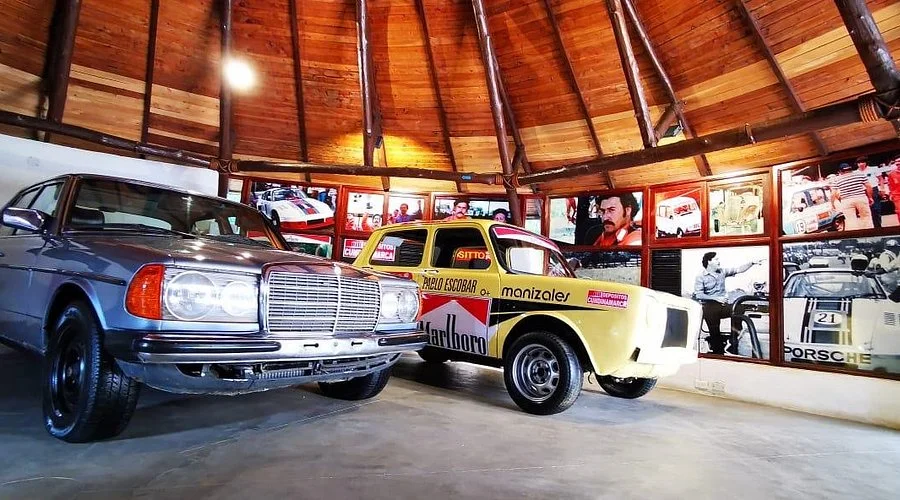
Personal effects and vehicles, guided by relatives. Included on some tours, optional on others, and the stop most worth deciding on in advance.
- 06Finish
Return
Back to the meeting point or your hotel. Private tours can usually adjust the order and pace on the day.
- 01
Meet or Get Collected
Shared tours meet at El Poblado Park or La 9 Mall. Private tours collect from your hotel, though one covers El Poblado and Laureles only.
Start - ~45 min02
Inflexión Park
The site of the demolished Mónaco building, now a memorial to the people killed by the Medellín Cartel. Included on the history-focused itineraries.
- 03
Montesacro Cemetery
Escobar's grave, alongside those of relatives and associates. A working suburban cemetery, so groups keep quiet and brief.
~1 hr 30 - ~2 hr 3004
The Los Olivos Rooftop
The house where Escobar was shot in December 1993. Viewed from the street; it is a private home in a residential barrio.
- 05
The Family Museum
Personal effects and vehicles, guided by relatives. Included on some tours, optional on others, and the stop most worth deciding on in advance.
~3 hrs - Finish06
Return
Back to the meeting point or your hotel. Private tours can usually adjust the order and pace on the day.
A Pablo Escobar tour runs three to five hours across four or five stops, and most of that time is spent in the vehicle rather than at the sites, which are scattered across Medellín rather than walkable. Guests who time it report roughly three and a half hours door to door on the shorter departures. The museum-only option is the exception at 45 to 90 minutes in one building.
Our experience (the sites are unremarkable): Almost none of these locations look like anything. The rooftop in Los Olivos is an ordinary terracotta roof on an ordinary house. Montesacro is a quiet suburban cemetery. Inflexión Park is a park. The entire value of the day sits in what the guide tells you while you stand there, which is why guide quality matters more on this tour than on any other in Medellín.
Our experience (the museum divides people): The family-run museum is the part visitors most often reconsider afterwards. Some find the personal effects genuinely illuminating; others describe feeling uncomfortable once they register that they have paid Escobar's relatives to look at his belongings. Two practical points that catch people out: it is small, and on several tours it sits at a different location from the meeting point, so the day ends there rather than back where you started. Sort out how you are getting back before you go in.
Our experience (the guide is the product): Nothing separates a five-star day from a wasted afternoon here except who is talking. The best guides lived through the era and answer follow-up questions from memory; the weakest recite facts that guests describe as available in any documentary. One reviewer's advice is worth repeating: do this while the people who actually lived it are still guiding, before the version you hear is the televised one.
Best Pablo Escobar Tours in Medellín
All five cover overlapping ground. The real differences are how long you get, whether a vehicle is involved, and how much of the itinerary is built around the family museum versus the city's own memorials.
Pablo Escobar in Medellín: The Places That Tell Your Story
The cheapest full tour and the most reviewed of the guided options at 1,790. Three to four hours covering Inflexión Park, Montesacro cemetery and the football pitches Escobar funded in the neighbourhoods. Museum entry depends on which ticket type you pick, which makes this the easiest option if you would rather not fund the family museum. Guests repeatedly describe the guiding as balanced rather than sensational.
Check availabilityPablo Escobar Tour: Museum, History and Beer
Four hours at 4.9 from over 1,250 reviews, with an itinerary that takes in Inflexión Park alongside the cemetery, the rooftop and the museum. Museum entry and a local beer tasting are bundled in rather than optional. The main tradeoff is scale, with groups running up to 30, the largest here.
Check availabilityPrivate Half-Day Pablo Escobar Godfather Tour
A private guide and vehicle with hotel pickup, though only in El Poblado and Laureles. Three to five hours depending on traffic and which upgrades you add. The optional La Catedral extension visits the site of the prison Escobar built for himself, which no other tour here covers. Food and drinks are not included.
Check availabilityThe Best Pablo City Tour in Medellín
The only tour that collects you from any address rather than a fixed zone, and the highest rated at 5.0, though from the smallest sample at 244 reviews. Four to five hours by private vehicle covering the graves at Montesacro, the Mónaco memorial square, the Los Olivos rooftop and the Dorado pitch.
Check availabilityMuseo Pablo Escobar
Not a tour: a 45 to 90 minute entry to the family-run museum with a bilingual guide, no transport and no other sites. Worth knowing that at $52 it costs more than the four-hour guided tour that includes this same museum. Wheelchair accessible and photography is permitted.
Check availabilityThe Medellín Cartel: A Short Timeline
Guides move quickly through the chronology, and it helps to arrive with the shape of it already in your head. These are the five dates that most tours are built around.
A raid by Colombia's DAS intelligence agency finds cocaine base hidden in a car tyre. Escobar is arrested alongside five others. The case is never successfully prosecuted, and the investigation into it later costs a justice minister his life.
Justice Minister Rodrigo Lara Bonilla, who had reopened the 1976 case and forced Escobar out of politics, is shot dead by cartel gunmen in April. This is the point at which the cartel turns openly on the Colombian state.
Presidential candidate Luis Carlos Galán is assassinated in August. Avianca Flight 203 is bombed, killing all 107 people aboard, in an attempt on his successor. Nine days later a truck bomb at the DAS building in Bogotá kills more than 50 people and injures over 2,200.
Escobar is shot on a rooftop in the Los Olivos neighbourhood of Medellín on 2 December, the day after his 44th birthday. The house is an ordinary home on an ordinary street, and tours view it from the road.
On 22 February the city implodes the Mónaco building, Escobar's former family home, in front of 1,600 people including victims' families. A memorial park replaces it, commemorating the thousands killed, among them four presidential candidates and around 500 police officers.
That last date is the one worth carrying into the tour. The city chose to remove the landmark and put the victims in its place, which is the frame Medellín itself uses for this history.
What Separates a History Tour From a Glorification Tour
Escobar tours began around 2011 and quickly split into two kinds. Knowing which you are booking is the single most useful thing on this page, and the itinerary gives it away before you arrive.
Signals you are on a history tour
It stops at Inflexión Park. This is the clearest marker. The Mónaco building, the six-storey apartment block where Escobar's family lived and the target of a 1988 car bomb, was demolished by the city in 2019. The park built in its place commemorates the people the Medellín Cartel killed. A guide who takes you there is telling a story with victims in it.
It names the dead. The cartel's bombing campaign killed civilians across Colombia, and the era's toll is not incidental colour. Guides who spend time on Avianca Flight 203, the DAS building bombing, or the journalists and judges killed are giving you the actual history.
It connects to what came after. Medellín's recovery, the metrocable lines, the library parks, the transformation of neighbourhoods like Comuna 13, is the part of the story that is still going. Tours that end in the 1990s are only telling you half of it.
Signals you are on a glorification tour
The marketing sells proximity. Phrasing built around walking in his footsteps, or treating the man as a figure of fascination rather than a subject of history, tends to carry through into how the day is guided.
The family museum is the centrepiece. The Pablo Escobar Museum is run by his relatives, and your entry fee goes to them. The exhibits are personal effects and vehicles: memorabilia rather than context. It is a legitimate thing to be curious about, but it is not a museum in the sense that Casa de la Memoria is.
Netflix is the reference point. Guides who frame the era through the television version are working from a dramatisation that Colombians widely regard as distorting, not from what happened.
What Medellín Thinks of These Tours
Worth saying plainly, because it affects how you should carry yourself on the day: a large share of Medellín would prefer these tours did not exist.
The city government has been explicit about it. Demolishing the Mónaco building in 2019 and replacing it with a victims' memorial was a deliberate act of removing a landmark that narco tourism had made into an attraction. Official tourism policy discourages Escobar-focused itineraries. The city has spent thirty years rebuilding a reputation, and the single most famous thing about it internationally remains the man who bombed it.
Among residents the feeling is more personal. People in their forties and older lived through the bombing years as children. A guide in Bogotá described refusing to say Escobar's name at all, calling him Voldemort instead, because of growing up surrounded by bombs. That reaction is common, and it is why the tone you bring matters more here than on a boat trip to Guatapé.
None of this means you should not go. Curiosity about how a city survived that period is legitimate, and the better tours are led by people who choose to tell that story. It does mean treating it as history rather than entertainment, not photographing residents around the sites, and being careful about how you talk about Escobar in front of Colombians.
Victim-Centred Alternatives Worth Considering
If the comparison above has left you uneasy, these cover the same period without putting Escobar at the centre. Several travelers do one of these instead; others do both and find the combination gives a fuller picture than either alone.
Museo Casa de la Memoria
Medellín's official museum of the conflict, built around the testimony of victims rather than the biography of perpetrators. Its Árbol de la Vida sculpture is made from 27,398 weapons surrendered or confiscated during disarmament. Free entry, and the clearest statement of how the city wants this history told.
We Don't Talk About Pablo
Built explicitly to answer visitors who arrive expecting the Netflix version. Covers the same era through urban transformation instead: the metrocable, the library parks, the neighbourhood interventions that changed the city. Guides are residents who lived through it.
Comuna 13 and the comuna tours
The neighbourhood tours cover the violence of the same period from the perspective of the people who stayed. Comuna 13 in particular is the story of what came after, told by guides who grew up there. It also happens to be the most popular tour in Medellín.
Read our Comuna 13 guideWho Should Skip This Tour?
Most guides to this subject only make the case for going. Based on what guests say afterwards, here is the honest version of who tends to regret it.
- You have already watched the documentaries closely. This is the single most common disappointment. Guests who arrive well read describe the content as available in any documentary, and one who had worked through the Netflix series found the guiding felt like facts read aloud. The tour adds most for people who know the outline but not the local account.
- You are uncomfortable funding the family museum. Entry fees go to Escobar's relatives, and its own reviews criticise it for covering what he did that was clever while omitting the murders and bombings. If that sits badly, book a tour that makes the museum optional rather than a fixed stop.
- You would rather understand modern Medellín. If what actually interests you is how the city recovered, the neighbourhood tours cover that far better. The cartel era is the setup; the transformation is the story.
- You dislike long stretches in traffic. The sites are spread across the city and the stops are brief. Guests consistently report more time in the vehicle than out of it, sometimes in older buses with unreliable air conditioning.
- You suspect you will feel complicit. Several visitors describe realising partway through, usually at the grave or the rooftop, that they had crossed a line they would rather not have. That reaction tends to arrive during the tour, not before booking.
None of this applies to everyone. Plenty of guests call it a highlight of Medellín, and the reason is almost always a guide who lived through the era. But if two or more of the points above describe you, the alternatives above will serve you better.
How Much Does a Pablo Escobar Tour Cost?
Shared Pablo Escobar tours in Medellín run $30 to $40 per person for three to four hours. Private tours with a vehicle and dedicated guide cost $89 to $93. Museum entry on its own is $52, which is more than the guided tour that already includes it, so the museum-only option only makes sense if you specifically want that site and nothing else.
Three to four hours with a guide, covering the memorial park, the cemetery and the rooftop. The $40 option includes museum entry and a beer tasting; the $30 option makes the museum optional. Groups run up to 30.
Forty-five to ninety minutes inside the family-run museum with a bilingual guide. No transport and no other sites. Costs more than the four-hour tour that includes the same museum.
Private vehicle and guide for three to five hours, with hotel pickup and a schedule you can adjust. The $89 option offers paid upgrades including the La Catedral prison site; the $93 option collects from any address.
The shared tours are the sensible default for most visitors. Choose private only if you want to control the pace, need door-to-door pickup outside El Poblado and Laureles, or specifically want to add La Catedral, which the shared itineraries do not cover.
Tips for Your Pablo Escobar Tour
- Check whether the itinerary includes Inflexión Park. It is the fastest way to tell a history tour from a true-crime one, and it is usually listed in the tour description before you book.
- Decide about the family museum in advance. It is run by Escobar's relatives and your entry fee goes to them. That is a reasonable thing to opt out of, and the $30 tour lets you.
- Read the pickup zone, not just the word private. One private tour collects only from El Poblado and Laureles; the other collects from any address. If you are staying elsewhere, that difference decides it.
- Be careful how you talk about Escobar in public. Many Colombians lost family in that era. Enthusiasm that reads as harmless in a group of tourists lands very differently in a taxi or a restaurant.
- Do not photograph residents around the sites. The rooftop is someone's home and the cemetery is in use. The buildings are fine; the people living around them did not sign up to be part of the tour.
- Pair it with Casa de la Memoria if you have time. Entry is free, and it gives you the victims' account of the same period, which the tours largely do not.
- Bring cash in small notes. Optional museum entries, guide tips and drinks along the way are cash transactions.
- Check your meeting address against a map before you set out. Guests have reported vouchers listing the wrong street number, in one case ten blocks from the actual meeting point. Two minutes of checking saves a frantic morning.
- Ask whether the departure is English-only or bilingual. On shared tours a bilingual guide delivers everything twice, which stretches the day and halves how much you hear in your own language.
- Sort your return before entering the museum. Where the museum is included it often sits away from the meeting point, and the tour ends there rather than looping back.
- Skip it if you have already watched the documentaries closely. Guests who arrive well read are the ones most likely to find the content familiar. This tour suits people who want the local account, not a recap.
Pablo Escobar Tour vs Comuna 13: Which Should You Book?
These are the two tours most visitors weigh against each other in Medellín, and they answer different questions. The Escobar tour explains how the city broke. The Comuna 13 tour shows you what it built afterwards. If you only have time for one, the second is the one most travelers finish gladder they chose.
| Pablo Escobar Tour | Comuna 13 Tour | |
|---|---|---|
| Focus | The cartel era, 1976 to 1993 | Modern Medellín and its recovery |
| The story | How the violence happened | Urban transformation and community art |
| Format | Mostly driving between scattered sites | Walking, carried uphill by public escalators |
| Price | From $30, private from $89 | From $16 |
| Duration | 3 to 5 hrs | 2 to 4 hrs |
| Controversy | Contested; the city discourages it | Community-led and city-supported |
| With children | Heavy subject matter, long drives | Works well; dance, food, hands-on graffiti |
| Who it suits | Readers who want the history explained locally | Almost everyone visiting Medellín |
Doing both in sequence is the strongest option if your schedule allows, and the order matters: the Escobar tour supplies the context that makes Comuna 13's murals legible, so take it first. Several guests say the pairing is what finally made the city make sense to them.
For lighter days either side, Medellín's outdoor options sit well against a heavy morning of history: tandem paragliding above the Aburrá Valley and ATV tours in the surrounding hills are both half-day trips. Our guide to safety in Medellín deals with what the city is actually like now, which is the question most people leave this tour asking. For the rest of the itinerary, our guide to the best things to do in Medellín compares every activity in the city on price, time and age limits.
How We Selected These Tours
The Colombia Trip Insider team assessed Medellín's cartel-history tours on the factors that matter for genuinely difficult subject matter: whether the itinerary includes the city's own victim memorials, how clearly each operator states what is and is not included, and whether the guiding treats the era as history rather than entertainment. We kept verified listings with a substantial review record. We noted, rather than quietly omitted, where a tour's centrepiece is the family-run museum, since that is a decision travelers should make knowingly rather than discover on the day. The five here span shared walking tours, a museum entry, and private car tours with optional prison and museum extensions, so you can choose on format, budget and, most importantly, on how you want this history told.
Frequently Asked Questions
Are Pablo Escobar tours in Medellín disrespectful?+
It depends heavily on which tour you book and how you behave on it. Medellín's government discourages Escobar tourism and demolished his Mónaco building in 2019, replacing it with a memorial to cartel victims, and many residents lost family in that era. Tours that visit that memorial and centre the victims are widely seen as legitimate history. Tours built around the family-run museum sit closer to memorabilia.
How much does a Pablo Escobar tour in Medellín cost?+
Shared tours run $30 to $40 per person for three to four hours. Private tours with a vehicle and dedicated guide cost $89 to $93. Museum entry alone is $52, which is more than the $40 guided tour that already includes the same museum, so the standalone entry only makes sense if that single site is all you want.
Is the Pablo Escobar Museum run by his family?+
Yes. The museum in El Poblado is owned and operated by Escobar's relatives, and entry fees go to them. Exhibits are personal effects, vehicles and photographs rather than historical context. Listings rarely state this plainly, so it is worth knowing before you book a tour that includes it as a fixed stop.
What do you actually see on a Pablo Escobar tour?+
Inflexión Park, built where the Mónaco building stood; Montesacro cemetery, where Escobar is buried; the rooftop in Los Olivos where he was shot in December 1993; and football pitches he funded in the barrios. Most tours also include the family museum. The sites themselves are ordinary buildings, so the guide's account is what carries the day.
Can you visit La Catedral, Escobar's prison?+
Yes, but only on some tours. La Catedral, the prison Escobar built for himself in Envigado, is offered as a paid upgrade on the $89 private tour and is not part of the standard shared itineraries. The site is now a monastery and viewpoint, well outside the city, which is why it needs the extra time and cost.
How long is a Pablo Escobar tour in Medellín?+
Three to five hours for a full guided tour, since the sites are scattered across the city and most of the time is spent driving between them. The museum-only option runs 45 to 90 minutes in a single building with no transport included.
What is a good alternative to a Pablo Escobar tour?+
Museo Casa de la Memoria is the city's own museum of the conflict, free to enter and built around victims' testimony rather than Escobar's biography. Its Árbol de la Vida sculpture is made from 27,398 surrendered weapons. Neighbourhood tours such as Comuna 13 cover the same period through the people who lived it and what the city built afterwards.
Is a Pablo Escobar tour worth it?+
It depends almost entirely on your guide and on how much you already know. Guests who get a guide who lived through the era describe it as a highlight of Medellín; those who do not are the ones calling it information available in any documentary. If you have already watched the series and read about the cartel closely, expect familiar ground. Safety is not a concern: the stops are ordinary public sites visited in daylight.
Affiliate note: Some links on this page are affiliate links. If you book through them, we may earn a small commission at no additional cost to you.